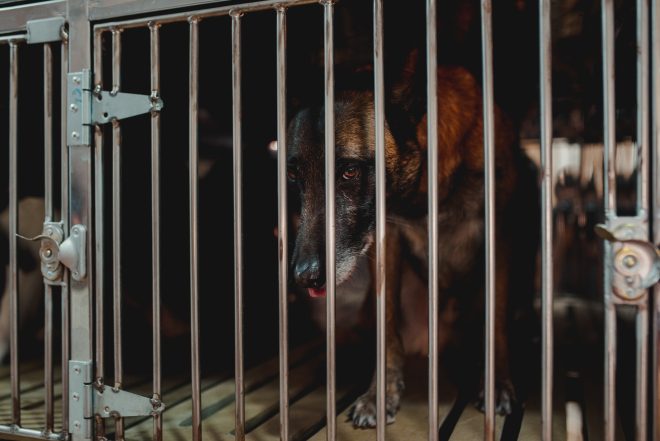
Every year in Canada thousands of pet dogs and cats are purchased by research facilities. Some spend their days as learning tools for students. Others are subjected to a life of pain and suffering and eventually killed.
Canada, unlike many other jurisdictions, has no federal legislation governing the use of animals in science. In fact, ours is the only G7 country without such legislation or regulatory oversight.
The Canadian Council on Animal Care (CCAC) governs only those research facilities that receive government funding and private labs that have agreed voluntarily to be certified. The statistics collected from those institutions show that approximately 5115 pet dogs and 4195 pet cats were sent to research laboratories across Canada in 2022. These numbers do not include privately funded research facilities that have not agreed to share their animal use data with the CCAC. Of the total number of pets sent to research in Canada, according to the Ontario’s Animal Use Data Forms, 1,805 dogs and 949 cats were from Ontario.
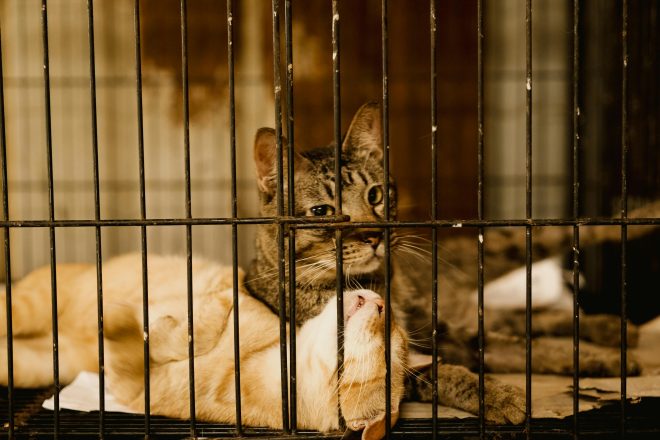
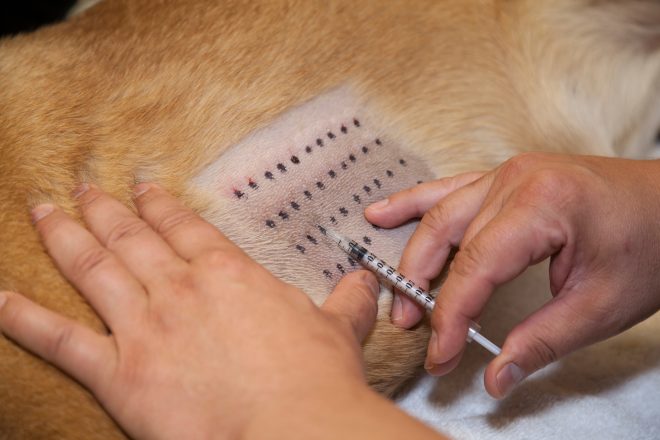
Ontario is the only province with legislation governing the use of animals in research. According to data collected by the ministry responsible, between 2018-2022, 6,476 pet dogs and 6,771 pet cats were used for research in Ontario. Instead of being adopted into loving homes, some of these animals were subjected to painful experiments.
About The Ontario Animals for Research Act
The Ontario Animals For Research Act and the regulations under the Act govern how pet dogs and cats are acquired by research facilities in Ontario. Ontario is the only province in all of Canada where the practice is mandated. This means that pet dogs and cats maybe used in other provinces, but it is only in Ontario where their sale is required by law.
How does the Act work?
Research facilities are able to obtain dogs and cats from Ontario pounds when these animals have been impounded pursuant to a municipal by-law.
It is little wonder that Ontario residents who lose their beloved pets do not know how to begin to find them when they can be sold to a research facility anywhere in Ontario.
Laurie Bishop, who lost her dog, Royal, to research, could not find out what happened to her dog by asking her pound keeper or the Ontario ministry responsible. She approached Animal Alliance for help.
The story of Royal is a disturbing example of what could happen to companion animals. Royal was a much loved, elderly dog who lived his entire life with his human family. One sad day, Royal wandered off his property. A kind person found him and took him to the local pound, thinking this friendly dog would be safely reunited with his family and even expressed an interest in adopting him if his family couldn’t be found. Instead, the pound keeper sold him to a research facility.
Click here for the story of Royal
Ontario is one of the largest users of dogs and cats for research. Please help us update the Animals for Research Act to ban the acquisition of pets from Ontario municipal pounds and shelters for use in research, and to ban the import of pets for research from outside of Ontario.
How You Can Help
Join us and help end the use of pets in research
The foundation of a winning campaign is sound planning and preparation, starting with budgeting. Please take the time to consider becoming a donor.
Download our No Pets in Research Campaign package and share it within your network! Click here to download.