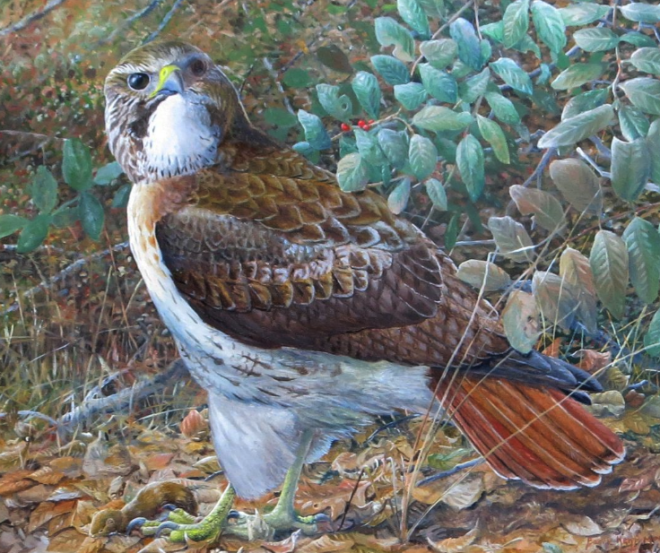
On any given day walking the streets of a city like Toronto, we have the pleasure of encountering free-living beings — coyotes, foxes, birds of prey, raccoons, and squirrels — sharing urban space with us. Amid the chaos of city life exists a connection to the natural world that many of us cherish, admire, and feel compelled to protect. There is a genuine curiosity about these individuals, a desire to observe them and learn from them — and a responsibility to ensure they are not harmed by our choices.
In honour of National Wildlife Week, we are shining a light on the harmful and far-reaching impacts of rodenticides — commonly known as rat poisons. These devices are everywhere: black bait boxes outside businesses, schools, places of worship, malls, and private homes. Most people walk past them without a second thought. But the consequences of their use extend far beyond the target species.
Rodenticides cause immense suffering to rats and mice, but the harm does not end there. Once these animals ingest the poison, they return to the broader ecosystem — and any animal who consumes them is exposed as well. This cycle of bioaccumulation moves up the food chain, threatening entire populations of species. Owls, foxes, coyotes, and numerous birds of prey are commonly found to have rodenticide compounds in their systems. Necropsies routinely identify these poisons as a cause of death. Some of these chemical compounds work by preventing normal blood clotting, leading to internal hemorrhaging — a painful and prolonged death. When parent animals die, their dependent young may also perish — from starvation, heat stress, hypothermia, or predation.
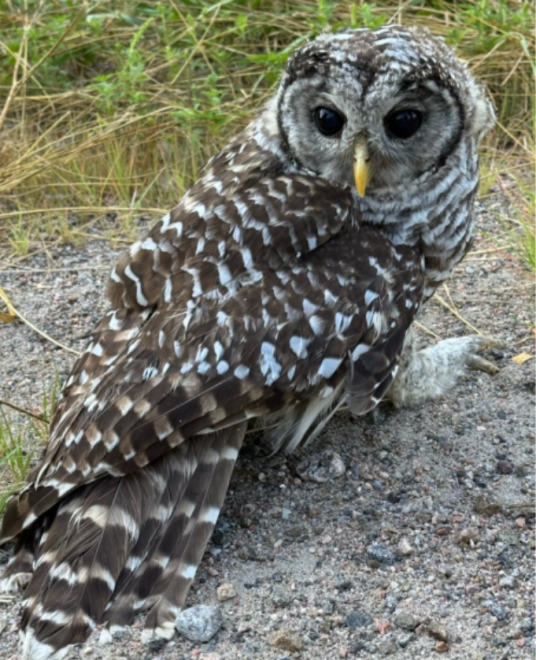
One such victim was a female barred owl, pictured below, who came into the care of Woodlands Wildlife Sanctuary last September, apparently after being struck by a vehicle. Her body was sent to the Canadian Wildlife Health Cooperative for necropsy, where three different rodenticides were found in her system. Her story illustrates how pervasive the reach of these poisons truly is — and how animals already made vulnerable by one harm are often contending with another.
The risk does not stop with free-living beings like owls and foxes. Children are also in danger. Despite claims that bait boxes are tamper-proof, a curious child can find a way into almost anything.
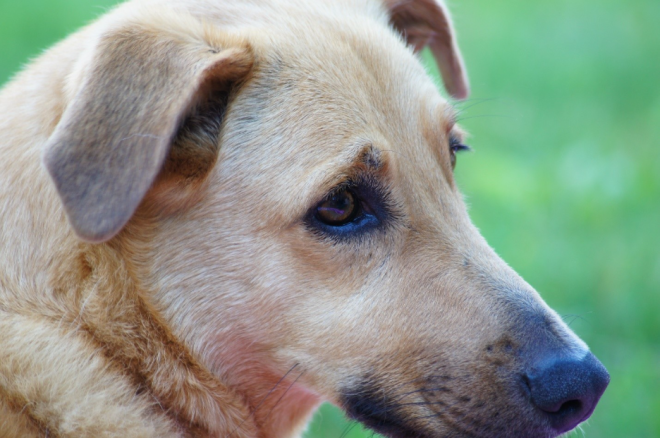
Our companion animals are equally at risk. Torchy, seen below, was a beloved companion who had been rescued by her family. She was very quick about seeing mice and trying to get them and that sadly led to her passing. She had ingested mice who had themselves ingested rodenticide and, eventually, she lost weight and went into liver failure due to the buildup of poison in her body. Many families have lost their companions due either to ingesting poison themselves or mice who had been exposed to it. There is nothing humane about this outcome for anyone.
There is a growing rodenticide-free movement, with advocates urging local politicians around the world to ban these ecologically irresponsible methods of “pest control”. More people are beginning to understand the harm that rodenticides cause — and how unnecessary they truly are.
We frequently hear the phrase “mouse problem” or “rat problem”, yet we rarely stop to examine the conditions that make urban areas attractive to these animals in the first place. A walk through Toronto quickly reveals the answer: mounds of improperly managed garbage, food waste, and other attractants that draw rodents not out of malice, but out of instinct. They are responding to our failures of stewardship — and we then place the burden of that failure on them, on other species of animals, on our children, and on our companions.
Humane operators can assess properties for potential entry points, identify attractants, and offer practical guidance on waste management that addresses the root causes of rodent activity. These approaches work — and they work without poisoning the ecosystem we all share.
It is our collective unwillingness to reflect on our own behaviour and actions as human beings that leads to preventable and avoidable issues. But it is equally within our collective power to do better. Properly storing waste, removing attractants, and securing our buildings against entry are small steps — but they are meaningful ones. They are the kinds of steps that protect free-living beings, safeguard our families, and reflect the values of stewardship and compassion that we, as animal advocates, hold central to our vision of a more just and humane world.
To learn more about this issue and to take action, please visit Rodenticide Free Ontario, a grassroots organization working to educate the public, businesses and governments on the harmful impacts of rodenticides and to ultimately ban the sale and use of them entirely. There are also very helpful tips on what to do if you come across an animal you may suspect has been exposed to poison as well as advice on helping seal and secure entryways in your dwelling and business.
We will continue to advocate for a world free from poisons of all kinds in order to protect our planet and all species who call it home – human and nonhuman alike.
