On September 25, 2026, Nucro Technics Inc. filed an application in the Ontario Superior Court of Justice asking the court to overturn Ontario’s new restrictions on invasive medical research involving dogs and cats, arguing that the legislation is unconstitutional.
Nucro-Technics is a contract research organization based in Scarborough. According to its court application, the company employs approximately 170 people, serves roughly 500 clients, and conducts some of its research on dogs.
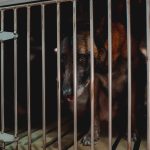
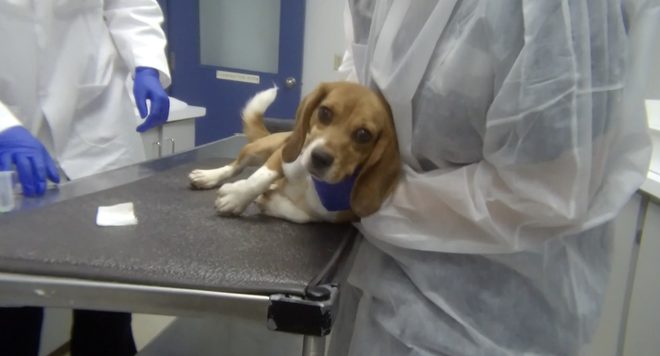
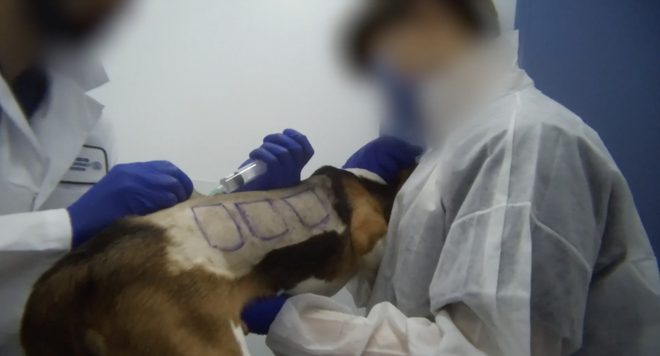
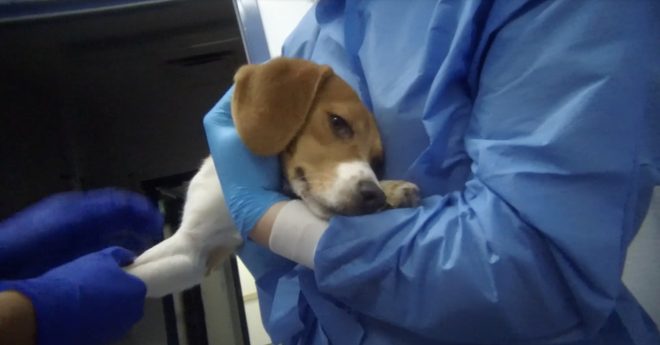
In December 2025, Last Chance for Animals (LCA) released footage from an undercover investigation inside Nucro-Technics. Filmed over a six-month period in 2023, the investigation documented the treatment of beagles used in pharmaceutical testing and drew renewed attention to animal welfare standards in Canada’s contract testing industry.
The footage shows beagles between six months and two years of age being administered test substances by injection, gavage (a tube inserted into the stomach), and oral dosing. It also documents dogs collapsing and vomiting after receiving test substances, dogs struggling and vocalizing during procedures, and an incident in which a gavage tube was reportedly inserted into a dog’s lungs rather than their stomach. According to LCA, the dogs were killed at the conclusion of the studies, necropsied and discarded in garbage cans.
The Research Restrictions
The research restrictions were enacted as Schedule 1 of the Keeping Criminals Behind Bars Act, 2026, which amended Ontario’s Animals for Research Act. The bill received royal assent on June 2, 2026, and the ban takes effect on January 1, 2027.
It adds two main prohibitions to the Act:
- Section 15.1: “No person shall perform invasive medical research on cats, dogs or other prescribed animals.” There is an exception for research with a veterinary purpose.
- Section 3.1: “No operator of a supply facility shall breed cats or dogs for research purposes.”
Breaching section 15.1 is a major offence. Individuals face fines of up to $130,000 for a first offence and $260,000 for a later offence, and up to two years in jail. Corporations face fines of up to $500,000 for a first offence and $1,000,000 for a later offence. Breaching section 3.1 is a minor offence with lower maximum penalties.
Animal Alliance of Canada believes dogs and cats should not be subject to invasive medical research and opposes Nucro-Technics’ efforts to overturn Ontario’s restrictions. To help readers understand the case, the following section summarizes the legal arguments advanced by Nucro-Technics in its court application.
Nucro-Technics’ Arguments
Nucro-Technics asks the court to declare that sections 15.1 and 3.1, the related penalty provisions in section 21, and the regulation defining “invasive medical research” are of no force or effect.
In the alternative, it asks the court to declare the ban inoperative to the extent that it conflicts with federal law, specifically the Food and Drugs Act and its regulations and the animal cruelty provision of the Criminal Code.
It is also asking for an interlocutory injunction. If granted, that would pause the restrictions before they take effect and stop Ontario from enforcing them until the case is decided.
Nucro-Technics Argues the Ban Constitutes Criminal Law
Under the Constitution, criminal law is reserved to the federal government. Nucro-Technics argues that Ontario has created a criminal law in disguise.
To show that purpose, the application relies on statements made before the ban was enacted. It quotes Premier Doug Ford as saying: “You can’t be experimenting on dogs. They’re part of our families. Or cats. Go with the mice, go with the rats, no problem.”
It also quotes Solicitor General Michael Kerzner’s testimony to the Standing Committee on Justice Policy: “Really, what we want to do … is ban invasive medical research on dogs and cats and prohibit the breeding.”
The application also points to the government’s choice to enact the restrictions as part of legislation titled the Keeping Criminals Behind Bars Act, 2026.
Nucro-Technics argues that the ban conflicts with two federal laws:
- The Criminal Code. Section 445.1 prohibits causing unnecessary pain or suffering to animals. Nucro-Technics argues that Parliament deliberately left necessary suffering, including suffering in medical research, outside the criminal law. It argues that Ontario has prohibited conduct Parliament chose not to criminalize.
- Federal drug safety rules. Health Canada requires animal testing before a drug can be tested in humans. It follows international guidelines that call for testing in a non-rodent species. Nucro-Technics argues that dog studies are “practically required” for certain drugs, and that a research organization in Ontario cannot comply with both these federal requirements and the ban.
In support of the injunction, Nucro-Technics says that if it must stop this research, it will suffer harm that cannot be compensated. According to the application, that harm would include disrupted research programs, the loss of clients and skilled employees, and damage to the company’s reputation. It also argues that the public will be harmed through delays to drug development and clinical trials.
The Science Is Moving Forward. Nucro-Technics Can Too.
Nucro-Technics argues that restrictions on invasive dog testing threaten pharmaceutical research and drug development. But while animal testing remains embedded in certain regulatory processes, advances in non-animal methods are creating opportunities to reduce and replace these practices.
According to its own published services, Nucro-Technics conducts studies assessing drug toxicity, cardiovascular and respiratory safety, and how substances behave in the body. The company also advertises non-animal testing capabilities, including in vitro methods used to study drug metabolism.
Other technologies are expanding what researchers can accomplish without animals. Human stem-cell-derived heart cells and computational models can help assess drug-related cardiac risks. Human liver-on-chip systems can identify certain toxic effects of experimental drugs. In one peer-reviewed study, a human Liver-Chip identified drug-induced liver injury with 87% sensitivity and 100% specificity across a set of 27 drugs.
These methods are not universally validated or accepted as complete replacements for every animal study. Complex safety assessments, including long-term systemic toxicity, remain challenging. However, the existence of scientific and regulatory limitations should not be mistaken for an absence of alternatives or opportunities to make progress.
Regulatory approaches are also evolving. In March 2026, the U.S. Food and Drug Administration released draft guidance supporting the validation and use of New Approach Methodologies (NAMs) in drug development, part of a broader effort to reduce reliance on animal testing while maintaining patient safety.
Rather than seeking to preserve invasive dog testing through the courts, Nucro-Technics has an opportunity to demonstrate scientific leadership. With its existing data and non-animal testing capabilities, the company could work with researchers, clients and regulators to expand the use of human-relevant methods, identify opportunities to replace animal studies, and help advance the validation of emerging technologies.
What happens next
Animal Alliance of Canada opposes Nucro-Technic’s effort to overturn Ontario’s restrictions on invasive medical research involving dogs and cats.
We will continue to monitor the proceedings closely and provide updates as the case progresses. At this time, the parties are awaiting a hearing date. ****
A copy of the application filed by Nucro-Technics is available here.