March 23 marks World Bear Day, a global celebration of these magnificent creatures and, for Animal Alliance, a day to reaffirm our commitment to their protection and shine a light on one of the most troubling wildlife practices in our country: Manitoba’s spring black bear hunt.
The Tragic Reality of Manitoba’s Spring Bear Hunt
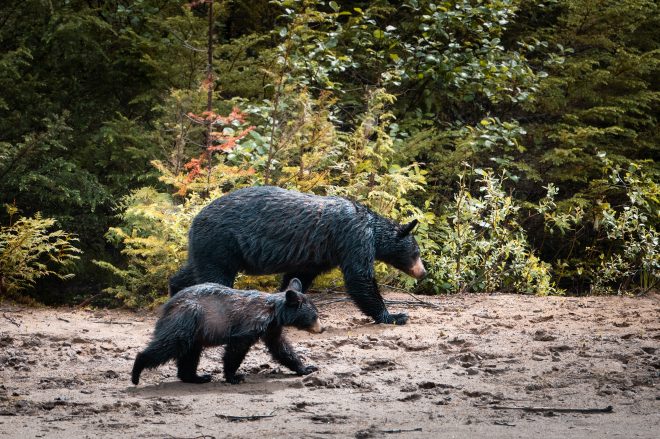
Every spring, hundreds of black bears are killed in Manitoba. Many of these bears are nursing mothers with dependent cubs. Unlike other large mammals, black bears are the only species allowed to be hunted in the spring when cubs are most vulnerable and reliant on their mothers for survival.
A report commissioned by the Animal Alliance of Canada Fund reveals a devastating truth that the Manitoba government has long downplayed:
- In 2023 alone, as many as 178 cubs were orphaned by the spring bear hunt
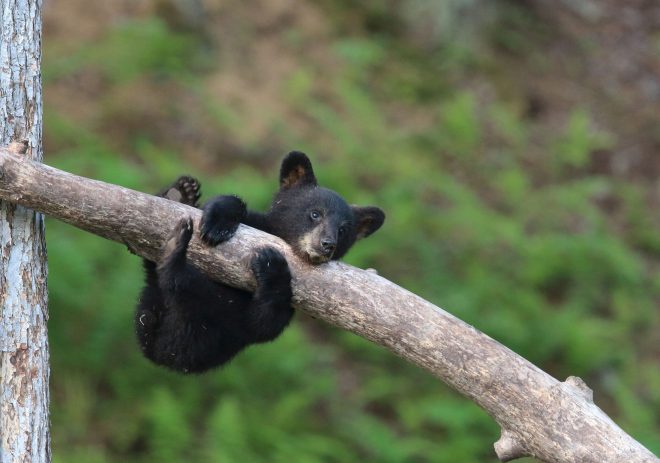
- Mother bears often hide their cubs in trees before foraging, making it impossible for hunters to know if a bear is nursing
- Bear fur is too thick to determine if a female is lactating—even trained biologists with scopes cannot reliably identify the sex of a bear
- The majority of orphaned cubs die by starvation, dehydration, or predation
The Cruel Practice of Baiting
Black bears are the only mammal species that can legally be lured with bait for hunting. Hunters set up nait stations stocked with meat and sugary foods such as donuts, cookies, and candy to attract bears emerging from hibernation and searching for scarce early-season food. Hunters then wait at these sites to kill the bears when they arrive, exploiting the animals’ hunger and predictable behaviour. In the epitome of a double standard, hunters are allowed to bait bears to shoot them, but photographers, for example, wouldn’t be allowed to bait bears to photograph them.
What makes this practice especially troubling is its proximity to human communities. Bait stations in Manitoba are allowed as close as 200 metres from a dwelling and 500 metres from cottage subdivisions or campgrounds. This creates a clear contradiction: while the government warns the public never to feed bears because it can trigger dangerous human-wildlife conflicts, hunters are simultaneously permitted to do exactly that. By conditioning bears to associate humans with food, baiting may contribute to the very conflicts wildlife policies are meant to prevent.
2025: An Unprecedented Year for Wildfires
Last year, Manitoba’s black bears faced the unimaginable threat of devastating wildfires.
In June 2025, at least 21 active wildfires, including eight deemed out of control, were burning across Manitoba. A province-wide state of emergency was declared on May 28, 2025, and over 21,000 residents were evacuated.
Animal Alliance immediately called on the government to suspend the spring bear hunt as:
- Hunters’ guns and ATVs presented unnecessary fire risks
- Habitat loss from fires meant bears were already struggling to find food
- Bears were being forced into new territories, increasing the likelihood of human-wildlife conflicts
- Foreign hunters continued to arrive while residents were being asked to avoid non-essential travel
The Government’s Response and Contradictions
Despite these calls and the obvious threats to both bears and public safety, the Manitoba government refused to suspend the hunt.
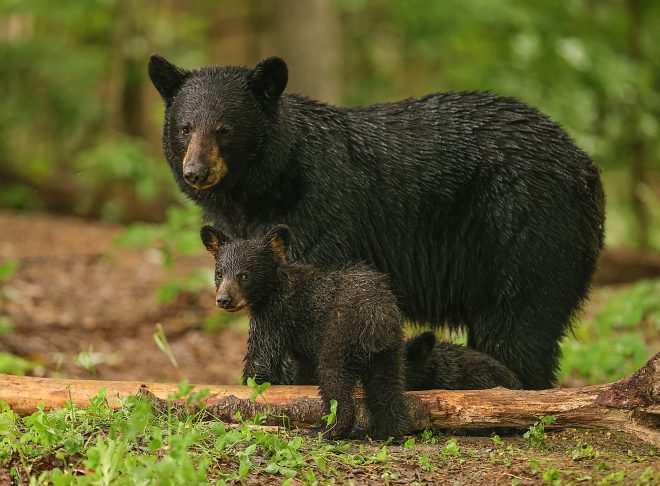
The case for ending the spring bear hunt rests on significant animal welfare, ecological, ethical, and cultural concerns. Female bears cannot be reliably identified in the field, leading to the frequent killing of nursing mothers and leaving orphaned cubs with little chance of survival. The use of baiting further exploits bears’ vulnerability after hibernation, causing suffering for highly intelligent, sentient animals.
Black bears are essential to ecosystem health, supporting seed dispersal, nutrient cycling, and forest regeneration. Hunting them in the spring targets populations at their most vulnerable, particularly as climate change and habitat loss already place increasing stress on wildlife. Ethical concerns are also prominent: many bears are killed by non-Canadian trophy hunters for sport rather than sustenance, and baiting conflicts with the fair chase principles many Canadians expect from hunters.
Bears also hold deep spiritual and cultural significance for many Indigenous peoples, including the Ojibwe of the Anishinaabe, where the Bear Clan is one of seven foundational clans. Yet Manitoba’s wildlife policies have not meaningfully incorporated traditional ecological knowledge.
What We’re Calling For
Animal Alliance of Canada is urging the Manitoba government to:
- End the spring black bear hunt permanently
- Conduct comprehensive bear population surveys to assess the cumulative impacts of hunting, habitat loss, and climate change
- Incorporate traditional ecological knowledge into wildlife management decisions
- Invest in non-lethal coexistence strategies rather than hunting to address human-bear conflicts
Take Action
This World Bear Day, you can make your voice heard:
Contact Manitoba’s Leaders
Premier Wab Kinew: premier@manitoba.ca
Minister of Natural Resources and Indigenous Futures Ian Bushie: minnrif@manitoba.ca
Use the form letter below or write your own message urging them to end the spring bear hunt.
Read Our Full Report
Read the comprehensive report commissioned by the Animal Alliance of Canada Fund. The report draws upon published studies and the Manitoba government’s own data to make the case for ending this cruel practice.
Support Our Work
Help us continue advocating for bears and all wildlife by making a donation: