Over the past year, Canadians have been confronted with disturbing reports from animal research facilities. Investigations, whistleblower accounts, and media reporting have revealed conditions that many members of the public may never have imagined existed behind laboratory doors.
As more information comes to light, important questions keep resurfacing: How effective is the “oversight” system meant to protect animals used in research? And why does public funding continue to support animal-based research under a system facing such serious questions about transparency and accountability?
According to the CCAC’s own certification policy, a probationary certificate is assigned to institutions with “significant or unresolved deficiencies” in their ethical animal care and use programs.
Of the Canadian Council on Animal Care’s (CCAC) current list of certified institutions, seven Canadian research sites or institutions hold a Probationary Certificate of GAP – Good Animal Practice®: Agriculture and Agri-Food Canada’s Lethbridge Research and Development Centre; the Canadian Food Inspection Agency’s Lethbridge facility; Institut de technologie agroalimentaire’s La Pocatière and Saint-Hyacinthe campuses; Ottawa Hospital Research Institute; the University of Ottawa; and the University of Victoria.
At the same time, York University continues to hold a regular Certificate of GAP, with its most recent interim visit listed as May 2026. Yet York has recently been the subject of serious allegations involving macaque monkeys used in research.
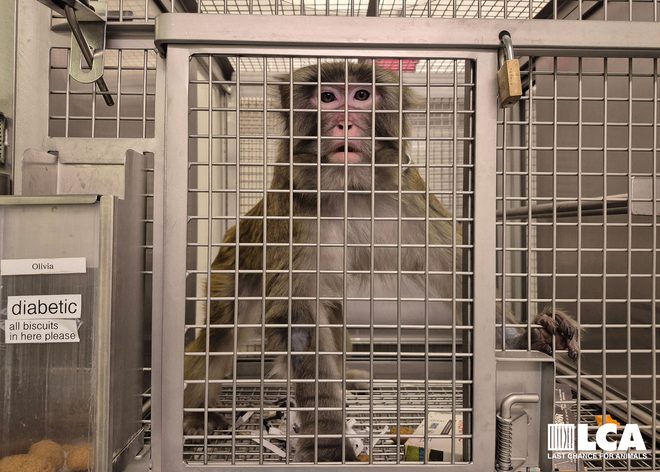
Reporting by the Investigative Journalism Bureau detailed whistleblower evidence alleging invasive procedures, injuries, signs of psychological distress, repeated implant complications, and concerns surrounding water restriction. Footage released by Last Chance for Animals showed one macaque appearing to drink his own urine, behaviour that a primatologist who reviewed the evidence said suggested acute water deprivation. The allegations prompted a CCAC review of York’s program.
In August, York University initially told Animal Alliance that the CCAC had found “no deviations” from its policies and guidelines. On September 16, however, York wrote to us again to correct that statement, explaining that the word “significant” had been inadvertently omitted. The CCAC had actually reported that it found no “significant deviations.” York also confirmed that the CCAC assessment identified opportunities for improvement and resulted in recommendations to the university. Those recommendations and the CCAC report itself have not been made public.
The CCAC states that a Certificate of GAP is awarded to institutions found to have high standards of ethical animal care and use that satisfy its guidelines and policies. But if an institution can retain that certification while facing serious welfare allegations and receiving undisclosed recommendations for improvement, the public is entitled to ask what “Good Animal Practice” actually tells us about conditions inside a research facility.
These concerns are not new.
In 2022, Animal Alliance of Canada published a detailed critique of the CCAC’s oversight system, examining concerns including limited public transparency, institutional self-reporting, the structure of animal care committees, and the CCAC’s lack of statutory regulatory authority. Our CCAC Critical Review argues that these structural weaknesses can make it difficult for the public to determine what is happening inside certified institutions and whether serious animal welfare concerns are being identified and meaningfully addressed.
The allegations at York University now raise another important question: if an institution can retain its Certificate of “Good Animal Practice” under these circumstances, what deficiencies led seven other institutions to be placed on probation?
That question is particularly important because a probationary certificate is not simply another category of certification. The CCAC itself says it is assigned when there are significant or unresolved deficiencies within an institution’s animal care and use program. Yet the public is generally not told what those deficiencies are.
Canada Still Lacks a Complete Picture of Animal Research
Many Canadian institutions conducting animal-based research receive public funding, and CCAC certification is required for institutions conducting animal research funded by federal granting agencies including the Canadian Institutes of Health Research and the Natural Sciences and Engineering Research Council.
However, CCAC participation is not universally mandatory for every institution conducting animal-based research in Canada. For private organizations, certification is voluntary unless required through a funder, contract, or other applicable condition. This means the CCAC’s list of certified institutions does not necessarily represent every facility in Canada using animals in research, testing, or teaching. As a result, there is no complete national picture of how many institutions are using animals, how many animals are being used outside the CCAC system, or the conditions in which those animals are kept.
With public funding should come meaningful transparency and accountability. Public confidence cannot depend on certificates and assurances alone. Canadians should be able to understand what happens when problems are identified, what institutions are required to correct, and whether those corrections actually improve the lives of animals used in research.
As investigations continue and more information becomes available, the conversation must move beyond whether institutions technically meet existing standards. The larger question is whether those standards — and the system responsible for enforcing them — provide the level of transparency, accountability, and animal protection Canadians expect in 2026. If the public is repeatedly disturbed by what is revealed inside facilities that remain certified for “Good Animal Practice,” then the standards themselves, and the system used to assess them, deserve closer scrutiny.
If you are troubled by what is being revealed inside research facilities across Canada, we invite you to join us and support our work to increase transparency, hold institutions accountable, and advance humane, human-relevant and animal-free approaches to science.