One month after telling us a meeting “would not be productive,” York University wrote again — this time to correct its own account of the CCAC’s findings. The word it says it “inadvertently omitted” materially changes what the university originally told us. Here’s what the letter said, and what York still refuses to say.
On August 12, York University finally broke its silence and told us that an “independent” Canadian Animal Care Council (CCAC) review had “not found deviations” from its animal care guidelines, and that a meeting with senior leadership of the university would not be productive.
In response, we continued to urge York to meet with us to discuss a constructive pathway forward: transitioning its research program toward human-relevant methods and retiring the #York9 monkeys to a species-appropriate sanctuary.
On September 16 — five weeks later — Dr. Amir Asif, Vice-President of Research & Innovation at York University, wrote to us again. Not to schedule the meeting we requested, but to correct an essential word.
What York Actually Wrote
1. On the correction
“I would like to clarify a point in the previous letter. In referring to the findings of the CCAC special assessment visit, the word ‘significant’ was inadvertently omitted from the sentence describing the CCAC’s finding. The CCAC stated that it ‘did not find significant deviations from CCAC policies and guidelines in the ethical use of animals in science.’ The CCAC report identified opportunities for improvement to the overall program and made recommendations to the University.”
That correction matters.
York’s first letter told us the CCAC had found “no deviations.” Its September letter now clarifies that the CCAC found no significant deviations — while also confirming that the assessment identified opportunities for improvement and resulted in recommendations to the university. York’s first response did not mention those recommendations.
We were told that a meeting would not be productive — but the assessment had, in fact, produced recommendations, and York has now confirmed receiving them. Five weeks and one corrective letter later, York still has not told us, or the public, what those recommendations are or on what timeline it intends to act on them.
“We received recommendations and are committed to them” is not meaningful transparency when the public is not permitted to know what those recommendations actually say.
2. On what still isn’t in the letter
Our August 14 letter asked York two direct questions:
- Whether York would work with us to transition the research program toward human-relevant methods.
- Whether York would work with us to retire the nine macaques currently held in the Behavioural Sciences Building to a species-appropriate facility.
York’s September 16 letter does not answer either one. It does not mention the nine macaques. It does not mention retirement, rehoming, or transfer to a species-appropriate sanctuary. It does not mention a meeting.
Instead, York directs us to the university’s own “Animal Care and Oversight” webpage — a page written and controlled by York about York’s own program — which similarly states that the CCAC made recommendations the university is committed to following.
That is not the same as releasing the CCAC report or disclosing the recommendations themselves.
3. On “fluid regulation” (restricting access to water)
York’s public-facing materials describe its use of fluid regulation in these terms:
“This is a well-established method used to support training and encourage participation in behavioural tasks. It is not intended to deprive animals of water for extended periods. Animal hydration and health are monitored by trained staff and veterinarians, and research protocols are subject to ethical review and veterinary oversight.”
Set aside, for a moment, that “well-established” speaks to how commonly or historically a practice has been used — not whether it is ethically acceptable. The more basic point is this: being permitted under a research protocol is not the same as being ethically justified.
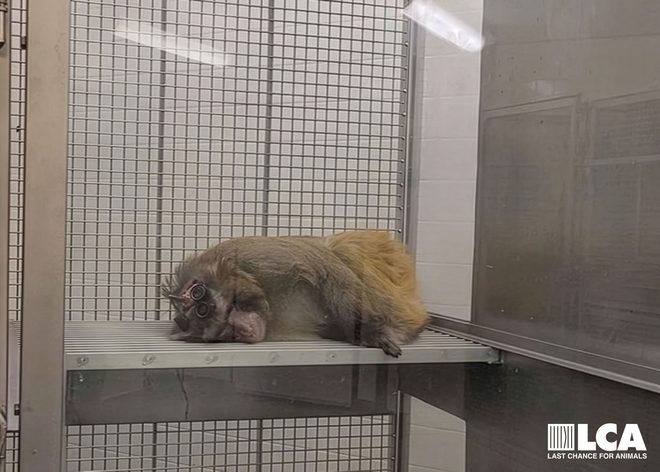
We are also not speculating about the welfare concerns associated with York’s fluid-regulation practices. Footage obtained by Last Chance for Animals showed one of the macaques appearing to drink his own urine. An expert who reviewed the footage told the Investigative Journalism Bureau that the behaviour suggested acute water dehydration.
York’s materials describe a policy.
The footage raises serious questions about what that policy meant for at least one of the animals subjected to it. Veterinary oversight did not necessarily prevent that outcome. It existed alongside it.
That is not, on its own, evidence that the protocol was acceptable.
4. On “independent external assessment”
York’s September letter states:
“The University’s program is also subject to independent external assessment. Through this oversight, York has maintained its CCAC Certificate of Good Animal Practice and provincial facility license.”
We laid out in August why we question York’s characterization of the CCAC assessment process as fully “independent.”
The CCAC develops the standards against which institutions are assessed, certifies participating institutions, and receives substantial revenue through annual program participation fees paid by participating institutions. Nothing in York’s new letter addresses those structural concerns, nor does York’s Certificate of Good Animal Practice disclose the findings or recommendations contained in the assessment report.
Certification is not a substitute for transparency.
What This Letter Actually Tells Us
Strip away the framing, and York’s September 16 letter confirms the following:
- York’s original statement that the CCAC found “no deviations” was incomplete and has now been corrected to “no significant deviations”;
- the CCAC identified opportunities for improvement in York’s animal care and use program and issued recommendations;
- York still has not disclosed what those recommendations are;
- York has still not answered whether it will transition this research toward human-relevant methods; and
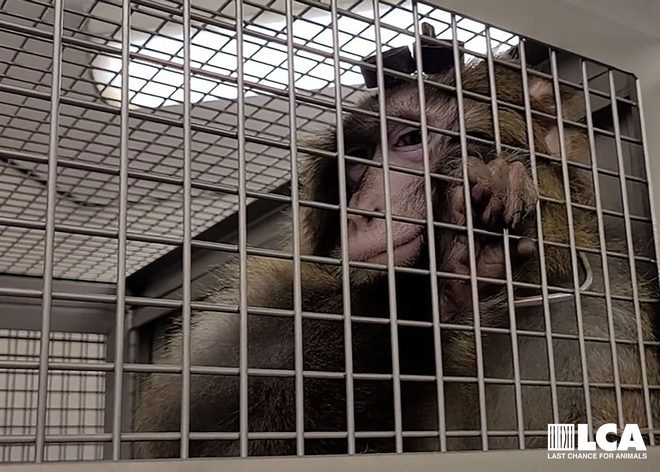
- York has still not answered our repeated requests to retire and rehome the nine macaques.
Those are not minor omissions. They are central to understanding what the assessment actually found and what York intends to do next.
What Needs to Happen
We are repeating the same three calls we made in August and hope the public will continue to amplify them, because nothing in York’s latest letter gives us reason to change them:
- Pressure York University to end its use of nonhuman primates in invasive research and release the macaques currently in its care to a species-appropriate sanctuary.
- Pressure the Ontario government to extend the same protections it granted to dogs and cats under Bill 75, ending invasive medical research on nonhuman primates province-wide.
- Pressure the federal government to accelerate investment in non-animal research methods, including organ-on-chip systems, computational modelling, and human-relevant testing platforms that reduce and ultimately replace reliance on primate models.
Take Action Now
- Send our action email
- Share this update
- Read the letters: